Capital Portfolio Optimization

When oil prices collapsed during COVID-19, decentralized capital decisions led to cuts in the wrong assets—profitable operations lost reinvestment capital while underperformers retained theirs. A portfolio-wide reassessment realigned a $5B/year capital program around profitability-based priorities and built a durable methodology for future allocation decisions.
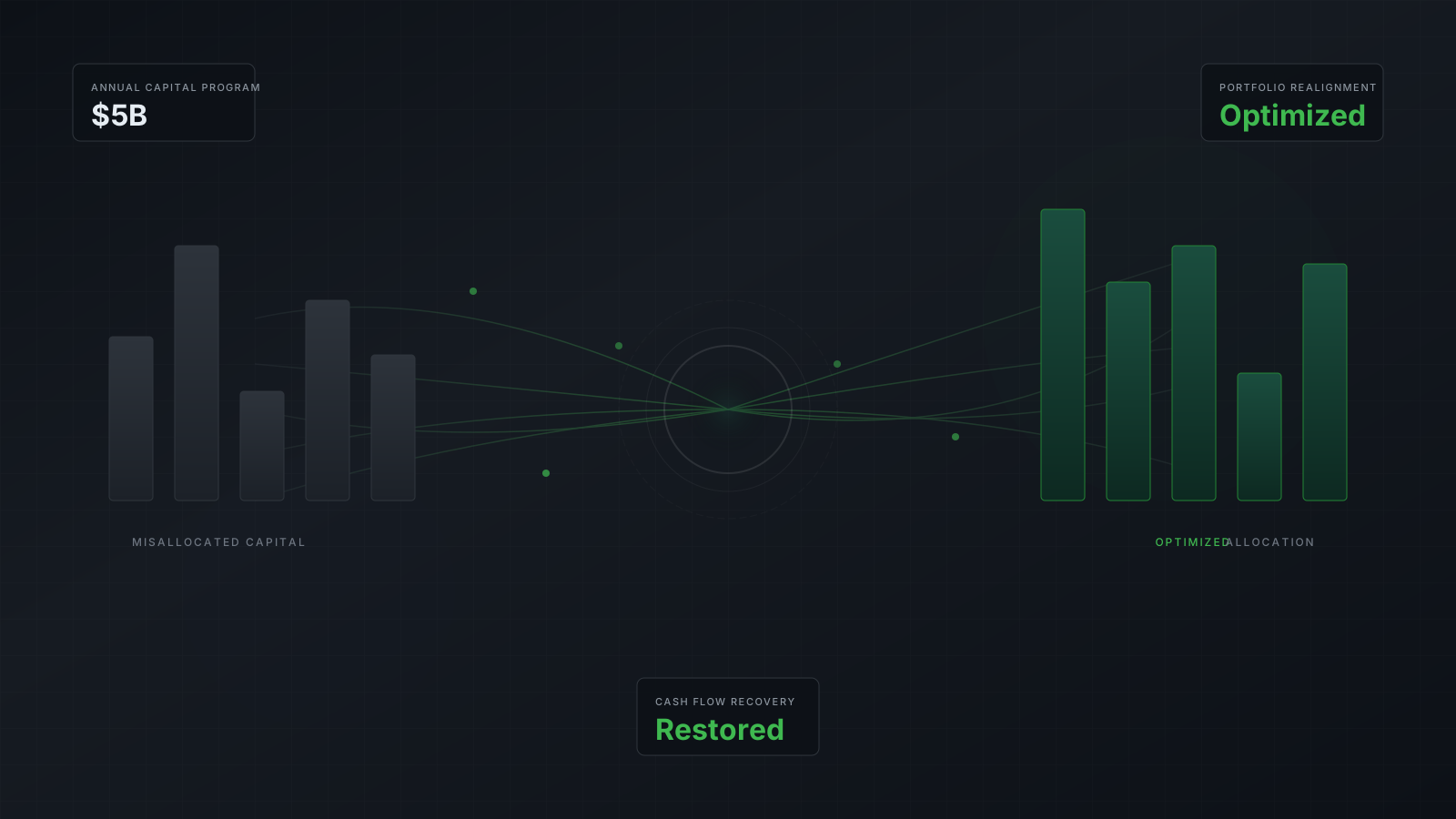
Capital portfolio optimization and strategic investment allocation

Project Overview

In early 2020, oil prices collapsed from ~$60/bbl to below $20/bbl within weeks. A major upstream operator with multiple producing assets faced an immediate capital allocation crisis. Each asset owner, acting rationally within their own scope, prioritized their own projects and protected their capital budget—resulting in cuts that landed on the wrong assets. High-margin, low-decline assets that should have retained reinvestment capital were cut. Marginal assets with weaker economics kept their full programs. The result: a projected cash flow shortfall in the hundreds of millions over the following three years, compounded by reservoir risks that accumulated as critical sustaining capital was deferred on the organization's most profitable operations.

The Challenge

Decentralized Decisions

Each asset owner protected their own capital, making locally rational decisions that were collectively destructive. Without a portfolio-level view, high-value assets were cut while weaker performers retained funding—the exact opposite of sound capital allocation.

Decentralized decisions icon

Cash Flow at Risk

The misallocated cuts created a projected shortfall in the hundreds of millions over the following three years. Production volumes, operating costs, and capital efficiency were all headed in the wrong direction—a compounding problem that would only worsen without intervention.

Cash flow risk icon

Technical Risk Accumulation

Deferring sustaining capital on producing reservoirs introduced technical risks that don't reverse easily. Well integrity issues, production decline acceleration, and deferred workovers created exposure that would take years to remediate—assuming the capital ever returned.

Technical risk icon

The Approach

1. Portfolio-Level Reassessment

We conducted a complete reevaluation of the entire capital portfolio—not just the marginal projects, but every asset and every program. Each asset was ranked by profitability, cash generation potential, and strategic value. This created a single, defensible view of where capital should flow.

Portfolio reassessment icon

2. Multi-Criteria Optimization

Capital allocation was reframed around key criteria: asset profitability per barrel, reservoir risk (decline rates, integrity issues), technical dependencies, and execution feasibility. Weighting these factors allowed for transparent tradeoffs rather than political negotiations between asset teams.

Multi-criteria optimization icon

3. Portfolio Management Methodology

We designed a repeatable portfolio management methodology that the organization could use beyond the crisis. This included governance processes, decision criteria, scenario modeling capabilities, and escalation paths—ensuring the $5B/year capital program could be realigned annually without repeating the decentralized dysfunction.

Portfolio management methodology icon

Results & Impact

Realigned

Capital was redirected from marginal assets to the organization's most profitable operations—restoring reinvestment capital to high-margin reservoirs and reversing the trajectory of technical risk accumulation on critical producing assets.

Recovered

The projected cash flow shortfall was addressed through portfolio realignment. By prioritizing profitability over politics, the organization closed the gap between forecasted and required cash generation without cutting deeper into total capital.

Institutionalized

A durable portfolio management methodology was embedded into the organization's annual capital planning process—providing the governance, criteria, and decision tools to allocate the $5B/year program on a principled basis in future cycles.

Facing a Similar Challenge?

Whether you're navigating a commodity price collapse, restructuring a capital portfolio, or building the governance to make principled allocation decisions under pressure—this is the kind of portfolio-level thinking and execution discipline that protects value when it matters most.