A rapid 5-week workshop series and Agile initiative management methodology that identified and delivered $60M in budget savings—roughly 10% of total budget—within 10 months across aviation, ground transportation, contractor onboarding, and lodging.
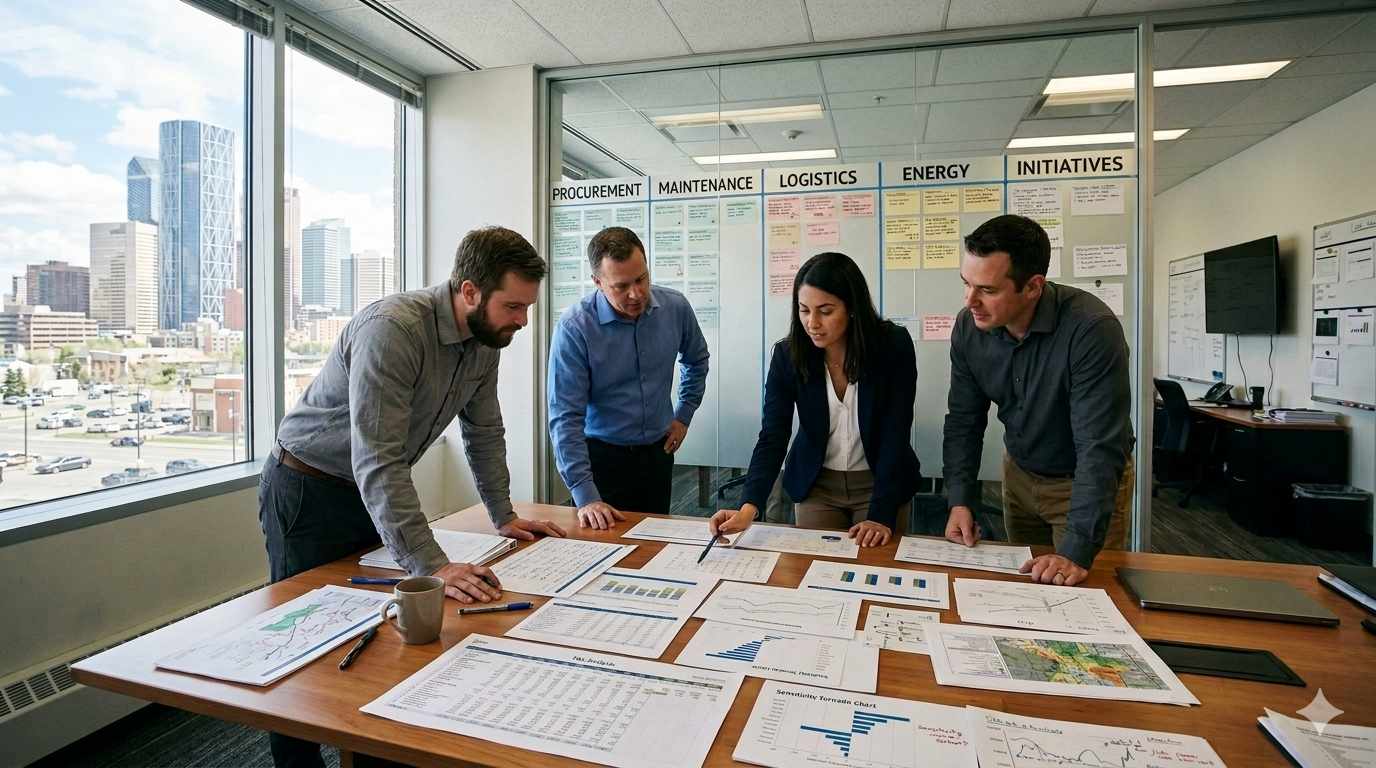
A major resource operation with an annual budget exceeding $600M was facing sustained cost pressure. Spending had grown organically across aviation, ground transportation, contractor onboarding, and workforce lodging—but without a structured mechanism for identifying inefficiencies or prioritizing improvements. The operation needed a way to rapidly surface cost reduction opportunities, build organizational accountability for execution, and create a transparent reporting structure that could sustain momentum beyond the initial effort. A Business Improvement Program was stood up to address this—starting with a rapid 5-week workshop series to identify opportunities, followed by the implementation of an Agile initiative management methodology with daily stand-ups, monthly sprints, area leads, and centralized program sponsorship to drive execution and stewardship.
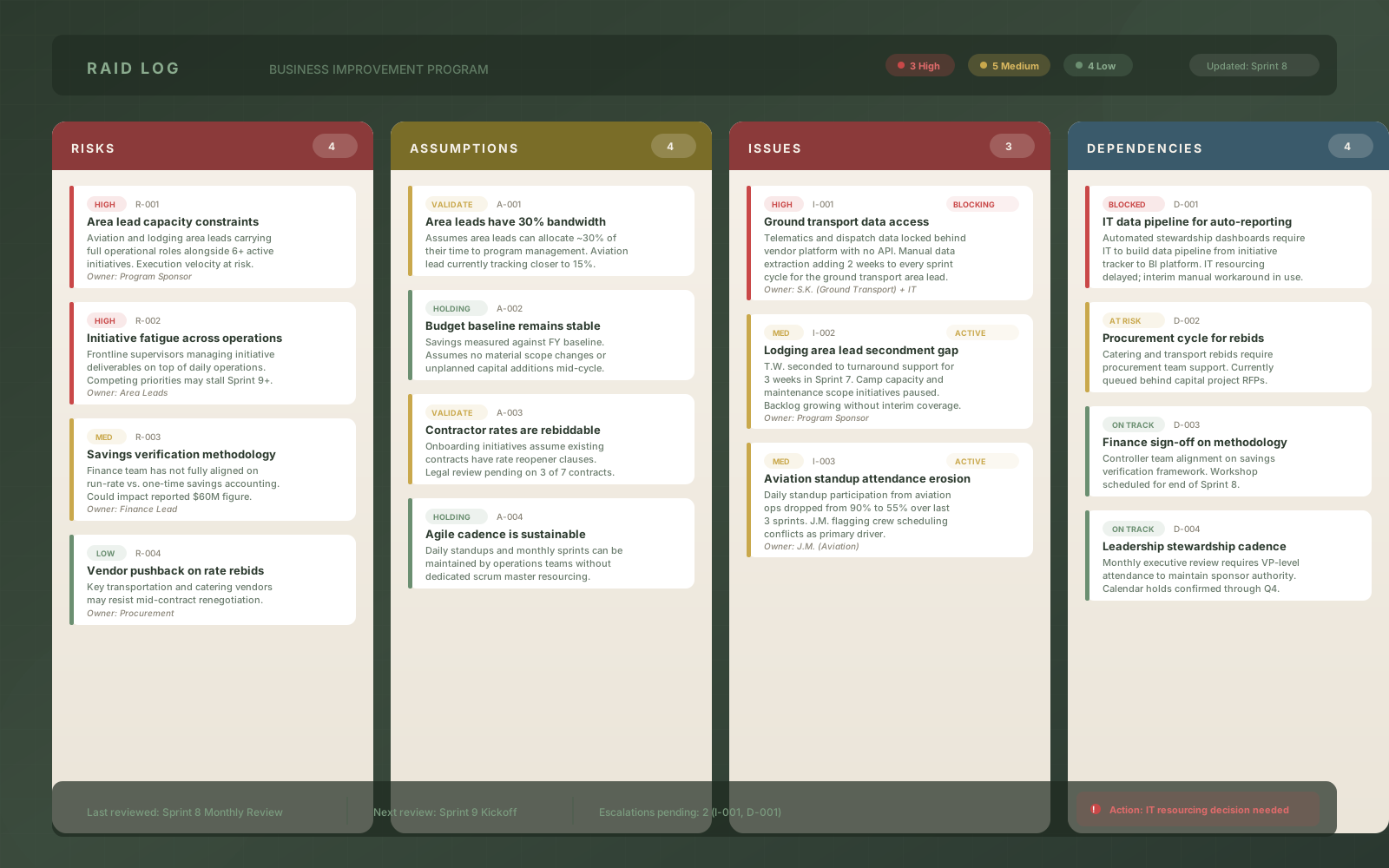
A structured RAID log was maintained throughout the program to track risks, validate assumptions, escalate issues, and manage cross-functional dependencies. Below is a snapshot from Sprint 8—illustrating the types of blockers the program actively managed to keep execution on track.
Approximately 10% of the total annual budget identified and captured within 10 months—driven by structured workshops, disciplined execution, and clear area-level accountability.
From initial workshop kickoff to realized savings—an Agile cadence of daily stand-ups and monthly sprints kept initiatives moving through identification, execution, and verification without losing momentum.
Automated reporting replaced manual stewardship processes, giving leadership real-time visibility into initiative progress and savings realization while significantly reducing administrative overhead across the program.
Whether the challenge is runaway operational costs, a lack of execution discipline, or reporting that can’t keep pace with the program—this is the kind of rapid, structured approach that turns improvement ambitions into measurable results.