Operational Digitization: Mining

Digitizing a pen-and-paper fuel and lubricants operation across Canada's oil sands—installing IoT, AI-enabled cameras, and live data pipelines to deliver $150M+ in sustained annual savings within a ~$1.2B operating budget.

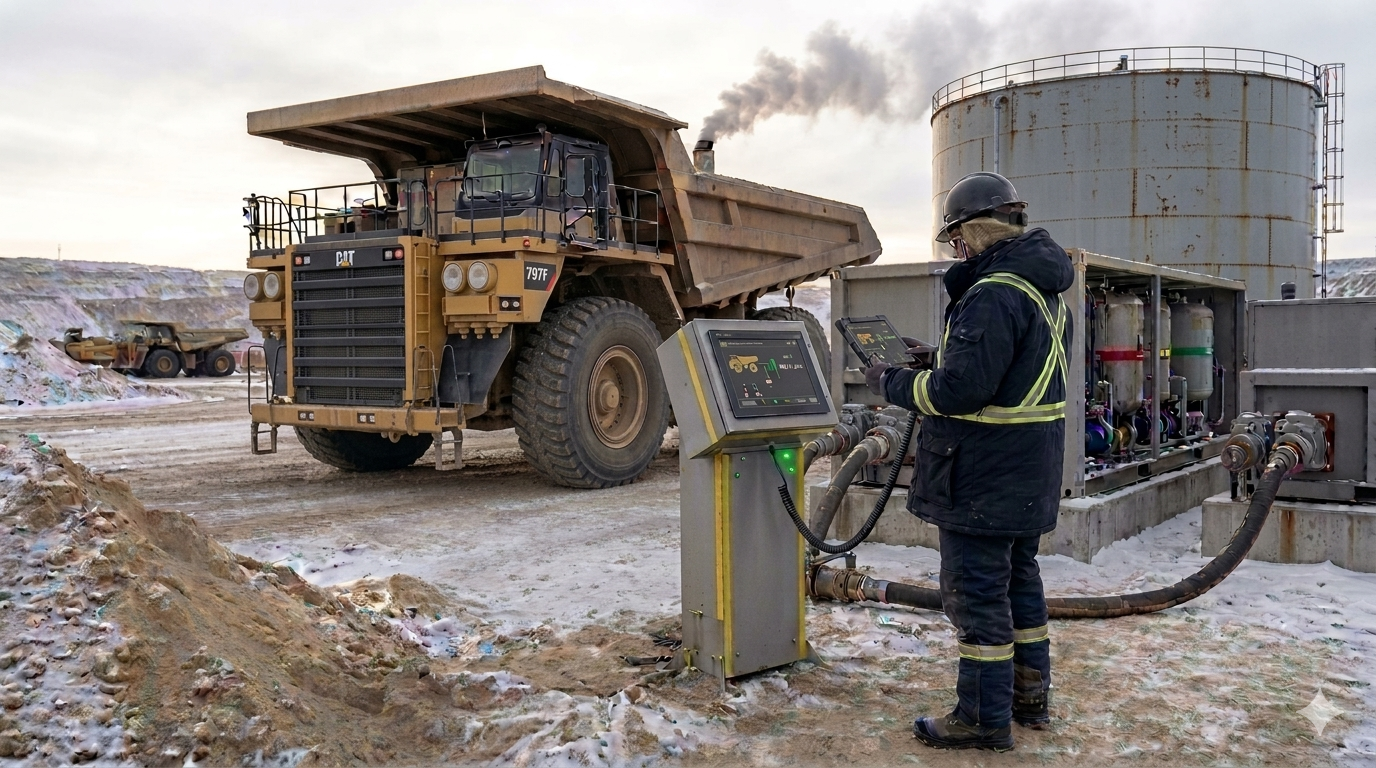
Digital operations dashboard showing real-time fleet and fuel monitoring data

Project Overview

This project involved the transformation of a 300+ person organization with $1.5B P&L accountability across one of Canada's largest oil sands mining complexes. The fuel and lubricants distribution operation, critical to keeping haul trucks, shovels, and processing equipment running, was still managed through pen-and-paper processes, manual dispatch, and fragmented reporting. There was no real-time visibility into fleet utilization, fuel delivery efficiency, or driver safety performance. The mandate was to transform this into a fully digitized, data-driven operation.

The Challenge

Manual, Paper-Based Operations

Fuel and lubricant distribution was managed entirely through manual processes—paper-based dispatch, handwritten logs, and no digital tracking. There was no visibility into delivery volumes, vehicle routing, or real-time fleet status, making it impossible to identify inefficiencies or control leakage.

Manual operations icon

Safety Blind Spots

With no telematics or in-cab monitoring, driver behavior and near-miss events went undetected. Safety coaching was reactive and inconsistent, relying on incident reports rather than leading indicators. There was no systematic way to identify risk before incidents occurred.

Safety alert icon

Mining Equipment Downtime

Inefficient fuel delivery scheduling meant critical mining equipment—haul trucks and shovels—sat idle waiting for refueling. This directly reduced mining productivity and production rates, with cascading impacts on throughput and cost-per-tonne across the operation.

Equipment downtime icon

The Approach

1. IoT & Sensor Infrastructure

Installed IoT equipment across the entire fuel and lube vehicle fleet, including GPS telematics, flow meters on all fuel and lubricant distribution lines, and connected sensors to track delivery volumes, vehicle location, and operating status in real time—replacing the pen-and-paper system entirely.

IoT telematics icon

2. AI Safety Cameras & Coaching

Deployed AI-enabled cameras inside and outside every vehicle to continuously monitor driver behavior, road conditions, and near-miss events. The system flagged risks in real time, enabling proactive safety coaching—shifting from reactive incident investigation to predictive intervention.

AI safety camera icon

3. Digital Pipelines & Live Dashboards

Built digital data pipelines connecting IoT sensors, flow meters, and telematics to live operational dashboards. Established new KPIs spanning delivery efficiency, fuel controls, fleet utilization, and safety performance—giving leadership real-time visibility to drive decisions and accountability.

Live dashboards icon

Results & Impact

$150M+

Sustained annual operating cost savings delivered through controls and leakage reduction, delivery cost optimization from vehicle redundancies, and reduced mining equipment refueling downtime—within a ~$1.2B Opex budget.

Higher

Mining productivity and production rates improved by reducing refueling wait times for critical haul trucks and shovels. Optimized delivery routing and scheduling meant less idle time and more tonnes moved per shift.

Safer

AI camera-driven coaching materially improved driver safety performance. Proactive identification of near-misses and at-risk behaviors replaced reactive incident investigation, strengthening safety culture across the operation.

Facing Similar Challenges?

Whether it's a mining operation, processing facility, or heavy industrial site—this is the kind of digital transformation and operational discipline that drives measurable performance improvement.