Power Asset Development: Alberta

Gas-fired cogeneration development from concept through sanction—requiring investment-grade business cases, AESO and regulatory navigation, and asset structuring for resilience in Alberta’s volatile merchant power market.

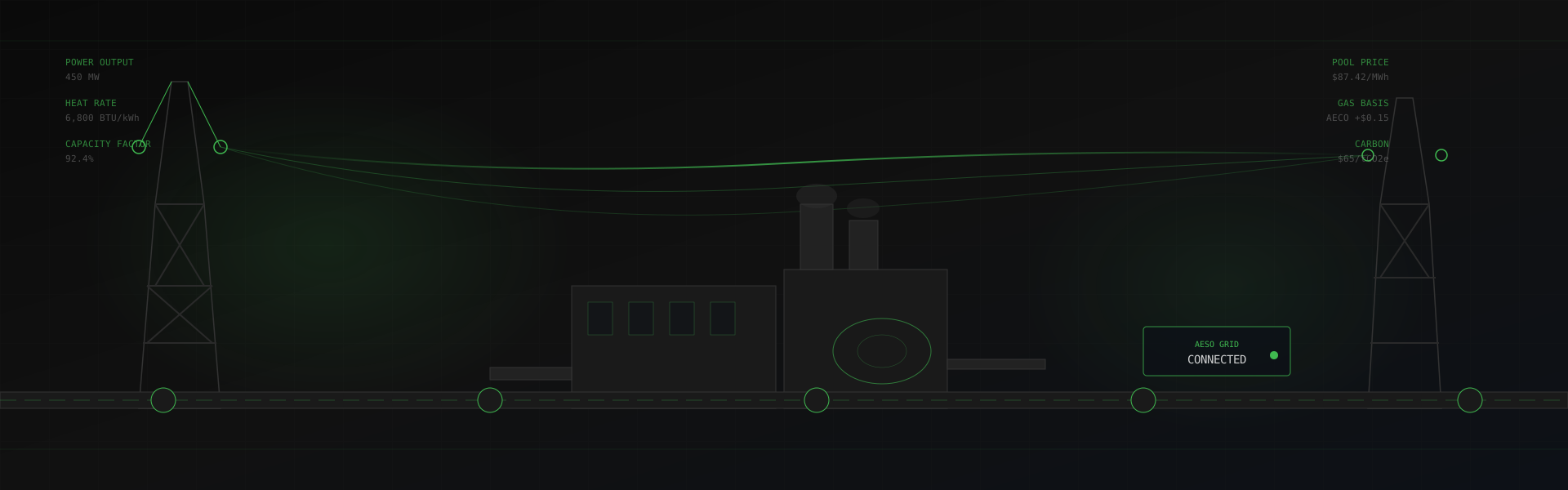
Project Overview

An Alberta-based energy company needed to develop and optimize gas-fired cogeneration assets capable of performing in one of North America’s most volatile power markets. The challenge extended well beyond engineering: the project required investment-grade commercial structuring, navigation of AESO interconnection and market rules, carbon policy alignment, and a contracting strategy designed for downside protection—not just upside optimization. The integrated development effort spanned from early-stage concept through regulatory approval and commercial operations, connecting technical design decisions directly to capital allocation discipline and market resilience.

Power generation operations and energy infrastructure

The Challenge

Merchant Market Volatility

Alberta’s energy-only market rewards efficiency and punishes complacency. Price forecasts alone are insufficient—heat rate performance, gas basis risk, and outage exposure all determine whether an asset survives or underperforms through market cycles. The business case needed to be built for the downside, not the upside.

Market volatility icon

Regulatory & Policy Complexity

AESO interconnection requirements, evolving carbon pricing mechanisms, and provincial regulatory frameworks created a multi-layered compliance landscape. Each regulatory pathway carried timeline risk, cost uncertainty, and the potential to reshape project economics if not managed proactively from the earliest stages of development.

Regulatory complexity icon

Technical-Commercial Integration

Engineering decisions—turbine selection, combined-cycle configuration, heat recovery design—directly impacted commercial outcomes like fuel efficiency, dispatch competitiveness, and contract structurability. The project required the ability to translate physics into IRR and ensure technical choices served capital discipline, not just engineering preferences.

Technical-commercial integration icon

The Approach

1. Investment-Grade Business Case

The commercial model was built from the downside up—stress-testing heat rate assumptions, gas basis exposure, forced outage rates, and carbon policy scenarios before validating the upside. The resulting business case was structured to pass internal sanction gates and withstand external scrutiny from lenders and partners.

Business case icon

2. Regulatory & Market Navigation

AESO interconnection applications, carbon offset strategy, and provincial regulatory approvals were managed as integrated workstreams—not isolated compliance tasks. Each regulatory milestone was mapped to commercial milestones, ensuring that approvals, permits, and market registrations arrived in sequence with capital commitments and construction timelines.

Regulatory navigation icon

3. Contracting for Downside Protection

Offtake agreements, fuel supply contracts, and tolling arrangements were structured to protect the asset through market downturns—not just optimize returns in favorable conditions. The contracting strategy locked in floor economics while preserving merchant upside exposure, creating an asset designed to survive its worst years and capitalize on its best.

Contract structuring icon

Results & Impact

Sanctioned

An investment-grade business case that passed internal sanction gates and secured capital commitment—built on validated downside economics, not optimistic forecasts.

Resilient

An asset with contracting and market positioning designed to survive Alberta’s price volatility—maintaining viable economics across commodity cycles and policy changes.

Operational

Full development lifecycle from concept through regulatory approval to commercial operations—with AESO interconnection, carbon compliance, and offtake agreements all aligned and executing.

Facing a Similar Challenge?

Whether you’re developing power assets, structuring investment-grade business cases, or navigating AESO and Alberta’s regulatory landscape—this is the kind of commercial discipline and technical integration that moves projects from concept to operations.